
Mobile Ordering Versus Counter Service for Cafés
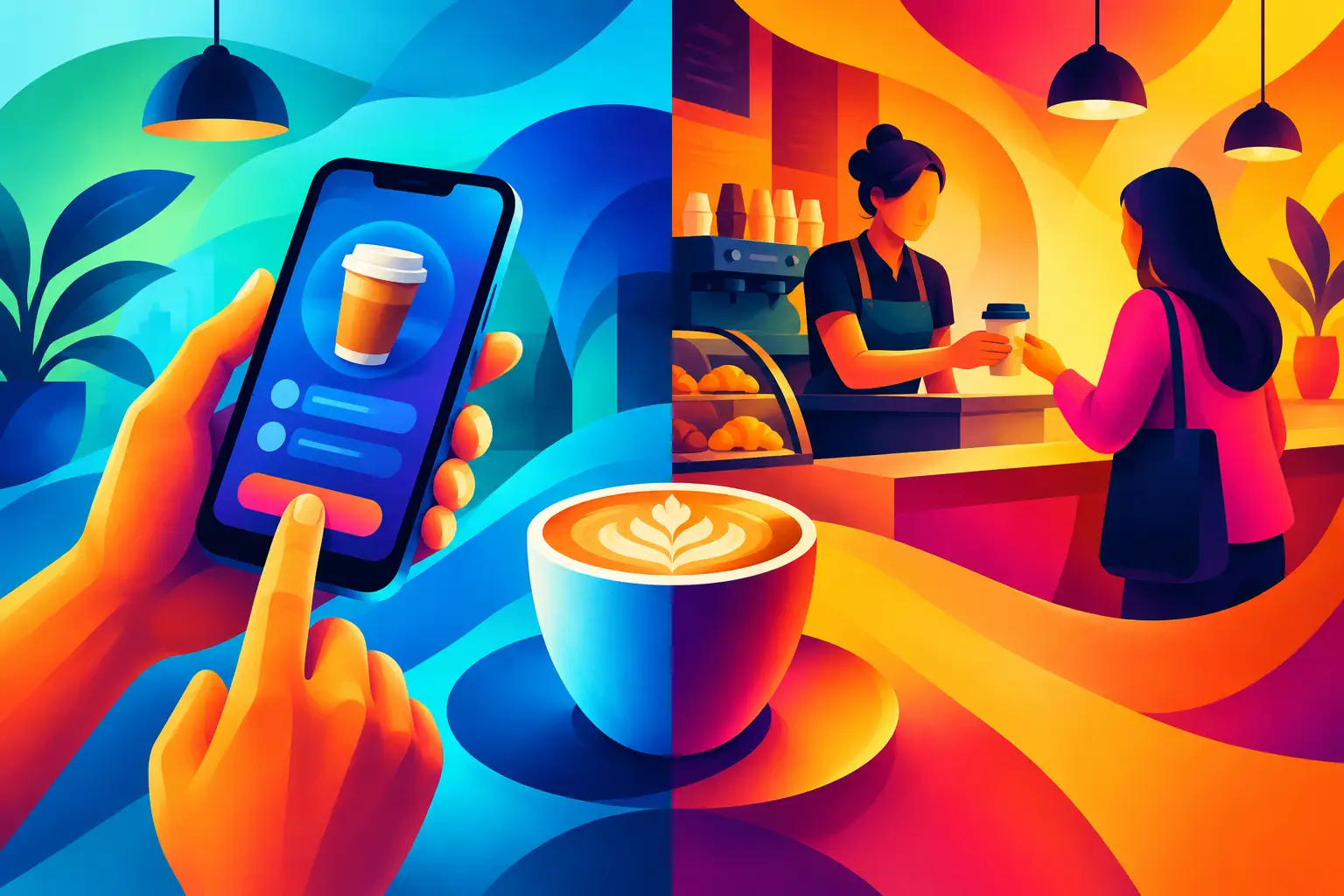
The 8:15 a.m. rush is not the moment to make customers choose between a good coffee and getting to work on time. That is the real issue behind mobile ordering versus counter service. For independent cafés, the question is not whether one service model is modern and the other is outdated. It is how to serve regulars quickly without making the counter feel less personal.
Counter service remains the heart of many coffee shops. It is where staff greet familiar faces, recommend a pastry, and fix a drink before it reaches the customer. Mobile ordering solves a different problem: it lets a customer decide, pay, and get in line before they arrive. Used well, the two can support each other.
Mobile Ordering Versus Counter Service: The Real Difference
Counter service asks customers to complete every step in person. They arrive, study the menu, order, pay, wait, and collect. This works especially well when the café has a steady pace, customers have time to browse, or the order needs a conversation. A first-time guest may want guidance on beans, milk options, or what makes a seasonal drink worthwhile.
Mobile ordering moves the decision earlier. Customers browse the menu on their phone, place an advance order, and arrive when it is ready or nearly ready. For the commuter who orders the same oat milk latte most weekdays, that convenience is meaningful. They are not looking for a new experience each morning. They want their usual coffee without gambling on the length of the line.
The operational difference matters too. At the counter, demand becomes visible only when people walk through the door. With advance orders, the team can see part of the upcoming workload before the customer arrives. That can make a busy morning more predictable, provided the café sets realistic pickup times and has a clear handoff process.
Where Counter Service Still Wins
A mobile-first café that ignores the counter can create its own friction. Some customers prefer to order face-to-face, especially when they are paying with cash, changing a drink on the spot, or buying for a group. Others simply enjoy the small interaction that makes a neighborhood café feel like their café.
Counter service also performs well for discovery. A pastry in the display case, a quick suggestion from a barista, or a conversation about a new roast can increase the value of a visit. A phone screen cannot fully replace that moment. It can show photos and descriptions, but it cannot read a customer’s uncertainty the way an experienced staff member can.
For shops with low morning volume or a menu that requires frequent customization, a counter-only model may be enough. Adding an ordering channel does not automatically fix service issues caused by slow drink production, an unclear menu, or an understaffed bar. Technology should remove a known point of friction, not cover up a larger operational problem.
Where Mobile Ordering Earns Its Place
Mobile ordering has its strongest case when the line is costing the café repeat visits. A regular may walk away after seeing ten people ahead of them, even if they like the coffee. They may choose a chain with predictable pickup instead. That is a customer-retention problem, not just a queue problem.
Advance ordering gives time-sensitive customers a reason to keep choosing an independent shop. They can order on the walk from the train, leave the office at a set time, and pick up without waiting to pay. For many guests, that reliability becomes part of their routine.
It can also take pressure off the register during the rush. Staff spend less time collecting payments and repeating common orders, leaving more attention for drink quality, handoff, and customers who are ordering in person. The goal is not to make staff work faster at every task. It is to remove unnecessary steps from repeat transactions.
There is a loyalty advantage as well. Customers who order through a digital experience are easier to recognize and reward consistently. Paper punch cards get lost, forgotten, or damaged. A digital loyalty card on a customer’s phone travels with them, making it simpler to track progress toward a reward and giving regulars a clear reason to return.
The Trade-Offs Café Owners Should Plan For
Mobile ordering introduces a new promise: the order will be ready when the customer expects it. If pickup estimates are too aggressive, customers arrive frustrated and crowd the counter anyway. If estimates are too conservative, the convenience disappears. A useful system needs order pacing that reflects the actual capacity of the bar, not an ideal version of a quiet afternoon.
Pickup organization matters just as much. A crowded shelf with unlabeled cups can turn a five-minute savings into confusion. Create a clearly marked pickup area, use customer names or order numbers consistently, and give staff a simple way to flag an order that needs clarification. The handoff should feel obvious to both mobile and walk-in customers.
Menu design needs discipline. A mobile menu should make frequent orders easy while preventing customizations that slow production or create mistakes. Start with the drinks and food customers order most often. Add modifiers that your team can execute reliably. If an option causes repeated confusion at the bar, simplify it rather than treating the app as a place to offer every possible variation.
There is also a human trade-off. A guest who has already ordered does not need to be ignored when they arrive. A quick greeting, eye contact, and a clear pickup station preserve the hospitality that made them choose a local café in the first place.
Build a Service Model Around Customer Habits
The best choice is usually not mobile ordering or counter service. It is a service model that gives customers the right path for the moment.
Start by watching the morning rush for a week. When do lines form? How long does it take to move a customer from the register to payment? Which drinks create the biggest bottleneck? How many guests are regulars ordering the same item? These answers show whether advance ordering would solve a real problem.
Then introduce it with a narrow purpose: help repeat customers skip the busiest part of the morning. Do not assume every menu item or every daypart needs the same setup. A café may benefit from advance orders before 10 a.m. while relying mostly on counter service through lunch and the afternoon.
Train staff on one consistent workflow. Mobile orders should enter the same production rhythm as counter orders, with clear rules for priority and pickup. If baristas have to improvise each time an advance order appears, the system adds stress instead of saving time.
Finally, connect convenience to retention. Encourage customers to use digital loyalty with their orders, whether they order ahead or walk in. Coffee2GO brings those two habits together: customers can keep rewards on their phones while using advance ordering when the morning line is not an option. The experience is familiar, but the paper card and avoidable waiting are gone.
Measure More Than Order Volume
More mobile orders are not automatically a win if they slow down the bar or reduce the quality of service for walk-ins. Review the results through a few practical questions: Are peak-time lines shorter? Are regular customers returning more often? Are pickup times accurate? Are staff making fewer payment-related errors? Is the average wait more predictable?
Also pay attention to customer behavior. If people place repeat orders, redeem rewards, and arrive confidently at pickup, the system is becoming part of their routine. If customers still join the line to ask where their order is, the issue may be signage, timing, or staff communication rather than the ordering platform itself.
A café does not need to choose efficiency over hospitality. Give the rushed regular a fast path, keep the counter welcoming for everyone else, and make every repeat visit easier than the last.