
How to Improve Cafe Throughput at Rush Hour
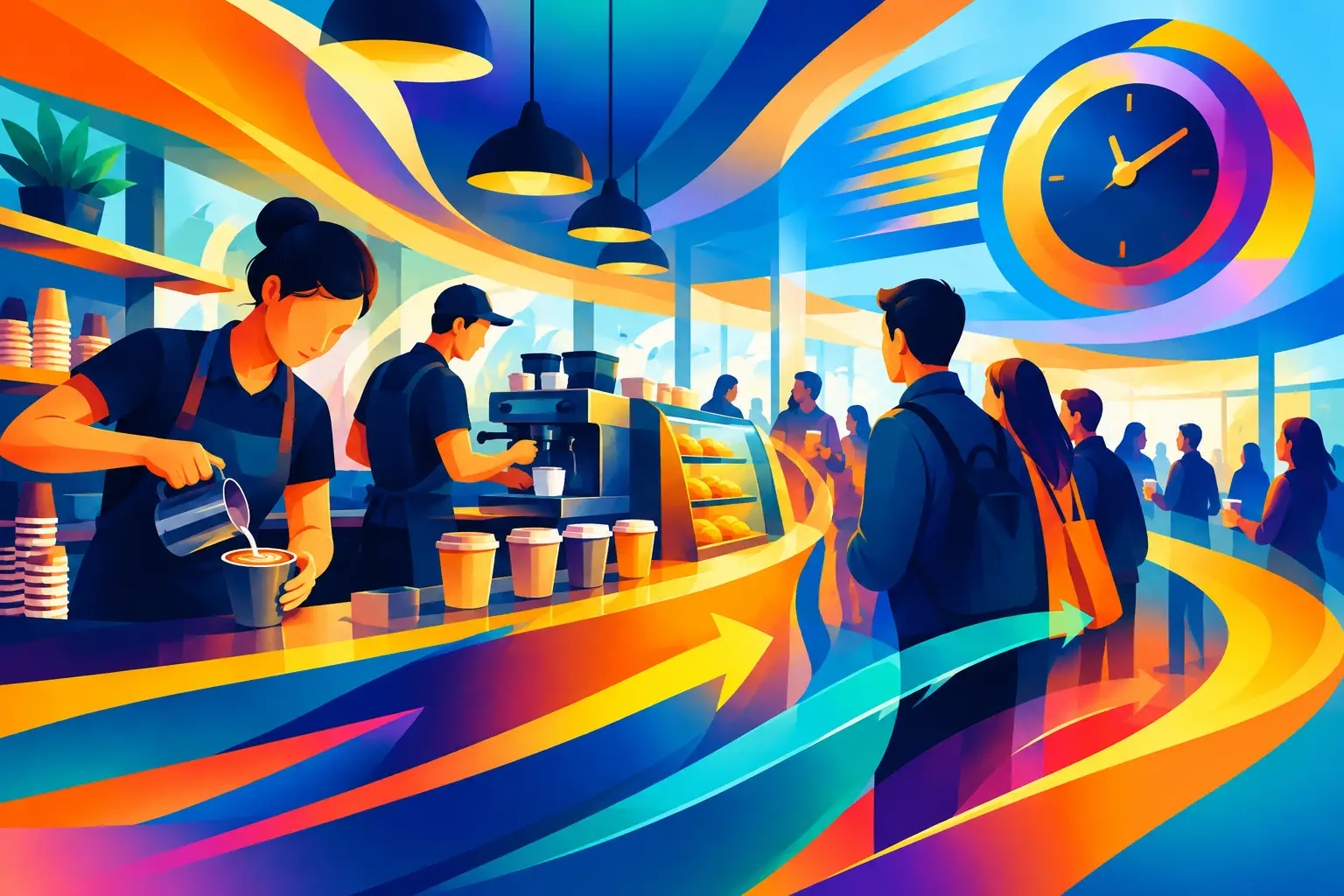
The 8:15 a.m. line tells you more than your sales report. If customers are checking the time, staff are calling orders twice, and the espresso machine is the only thing moving at full speed, you have a throughput problem. Knowing how to improve cafe throughput is not about asking baristas to work faster. It is about removing the small delays that pile up between a customer entering, ordering, paying, receiving a drink, and coming back tomorrow.
For an independent cafe, faster service has a direct payoff: more completed orders during the busiest window, fewer walkouts, calmer staff, and a better reason for regulars to choose your shop over the one down the block. The goal is not to turn hospitality into an assembly line. It is to make the routine parts of service simple enough that your team has more time for the human parts.
How to improve cafe throughput without cutting corners
Throughput is the number of orders your cafe can complete in a given period at an acceptable standard of quality and accuracy. The last part matters. A fast line that produces remakes, missing modifiers, or frustrated customers is only shifting the problem farther down the counter.
Start by watching one full rush, preferably with a notepad rather than assumptions. Track where orders wait. Is the bottleneck at the register, payment terminal, espresso machine, pastry case, pickup counter, or handoff? In many cafes, several people are busy but one step is holding up every order behind it.
Look for repeatable friction, not one-off mistakes. A customer taking two minutes to decide is normal. Every customer needing to ask how the loyalty card works is a process problem. A barista walking across the bar for lids ten times in an hour is a layout problem. The best fixes are usually unglamorous, but they save seconds on nearly every transaction.
Measure the line in useful stages
A single average ticket time can hide the real issue. Break the customer journey into stages: time spent waiting to order, ordering and payment time, drink production time, and time waiting at pickup. Even a rough count will reveal where capacity is being lost.
For example, if orders are taken quickly but drinks sit waiting for food items, the espresso bar is not your main constraint. If customers bunch up at payment because staff must explain a paper punch card or hunt for a stamp, improving the bar workflow will not solve the line. Measure for a few comparable mornings before changing everything at once.
Build a rush-hour workflow your team can repeat
The fastest cafes do not depend on one exceptional employee. They use a clear sequence that any trained team member can follow when the line builds.
Assign stations based on actual demand. During a weekday morning rush, one person may focus on greeting, ordering, and payment while another makes espresso drinks and a third handles drip coffee, food, restocking, and handoff. In a smaller shop with two people, the roles can still be distinct: one takes the customer-facing work while the other protects drink production.
Roles should flex when volume changes, but avoid constant swapping. When everyone is helping everywhere, small tasks get missed. Decide in advance what triggers a change, such as five drinks in queue or a line past the door. A simple verbal cue gives the team permission to shift without stopping to negotiate in the moment.
Set the bar before the first customer arrives
Most rush-hour delays begin during opening prep. Milk needs to be within reach, cups and lids need to be stocked, pastry bags need to be ready, and backup ingredients need to be accessible without blocking the bar. A clean, fully stocked station is not just good presentation. It prevents the costly one-minute scramble when a popular size of cup disappears at 8:40.
Create a short opening checklist for the items that create the biggest interruptions. Check espresso calibration, ice, milks, syrups, cups, lids, receipt paper, food packaging, and change or terminal readiness. Keep the list short enough that it gets used. A long checklist nobody follows is not a system.
Prep should reflect your order mix. If cold drinks dominate after school but hot lattes lead in the morning, stock and staff accordingly. Sales patterns are more valuable than generic cafe advice. Your busiest 30 minutes should shape where you place supplies and which menu items you make easiest to produce.
Simplify the menu where it slows the line
Choice is good until it stops customers from ordering and stops staff from producing. Review the items that take the most time, require unusual ingredients, or generate the most clarifying questions. That does not automatically mean removing them. A high-margin signature drink may be worth its slower production time. But a low-selling, complicated item can quietly consume the capacity needed for faster-moving favorites.
Make the menu easier to scan from where customers actually stand. Group drinks clearly, keep descriptions short, and make popular choices visible. If guests regularly ask what comes in a drink, the menu is doing too little work before they reach the register.
You can also guide demand without being pushy. Feature a fast, reliable drink or breakfast pairing during peak periods. Batch brew enough of your most popular drip coffee to prevent avoidable waits, while maintaining a realistic hold-time standard. The trade-off is waste, so use sales data from similar days rather than overproducing out of fear of running out.
Reduce checkout friction and protect the pickup area
Payment and loyalty should not create a pause at the exact point when your line needs to move. Paper punch cards are familiar, but they get forgotten, lost, damaged, and manually tracked. They also invite extra questions at the counter when staff are already balancing orders and payments.
A digital loyalty program keeps the familiar reward model while moving it to the customer’s phone. Customers can earn and redeem without pulling a crumpled card from a wallet, and staff have one less paper process to manage. Coffee2GO is built around that practical shift, helping cafes replace paper-card friction with digital rewards and advance ordering that fits everyday service.
Advance ordering can have an even bigger effect on the morning rush when it is managed with real capacity in mind. It does not eliminate work. It moves the order decision and payment out of the physical line, giving your team a clearer view of demand before the customer arrives. Set realistic pickup windows and limit order volume if the bar is already at capacity. Promising a five-minute pickup when the queue says fifteen creates a different kind of customer disappointment.
The pickup area deserves the same attention as the register. Clearly label it, keep completed drinks organized, and use a consistent calling method. If customers crowd the ordering counter to search for their drinks, they block the next customers from ordering. A visible pickup zone protects both flow and customer confidence.
Train for accuracy at speed
Speed comes from confidence, not panic. New team members need a simple order sequence, clear standards for drink builds, and practice during quieter periods. Teach them which details must be confirmed before the order is sent, such as size, temperature, milk choice, and food items. Correcting an order before it reaches the bar is much faster than remaking it after pickup.
Use brief post-rush check-ins. Ask one practical question: where did we lose time today? The answer might be a missing restock, a confusing modifier, a printer issue, or a station assignment that did not match the order mix. Fixing one recurring issue each week is more sustainable than rolling out a major new process every month.
Also protect your staff from a false definition of efficiency. Skipping greetings, rushing customers who need a moment, or pushing a team beyond a reasonable pace can damage the experience that makes a local cafe worth returning to. The better approach is to speed up the predictable parts so staff can still be present when a customer needs help.
Make small changes, then check the results
Choose one bottleneck, make one change, and compare the same daypart over the next week. Watch completed orders, average wait times, remakes, customer comments, and staff feedback. Revenue matters, but it is not the only signal. A modest increase in orders with fewer mistakes and a calmer bar is a meaningful operational win.
Some fixes will be immediate, such as moving lids closer to the handoff station. Others, like refining advance-order capacity or reworking staffing, need more testing. What works for a compact espresso bar may not work for a cafe with a full kitchen, so let your own rush-hour data make the final call.
The most useful improvement is often the one customers barely notice: they walk in, order or pick up, get the drink they expected, and leave feeling that your cafe respected their time. Make that experience easy to repeat, and the morning line becomes an opportunity rather than a daily fire drill.